Amazon Product Title Limit: What Sellers Need to Know About the New 75-Character Rule
Amazon sellers have spent years optimizing product titles with keywords, features, benefits, dimensions, compatibility information, and branding elements. That strategy is about to change dramatically.
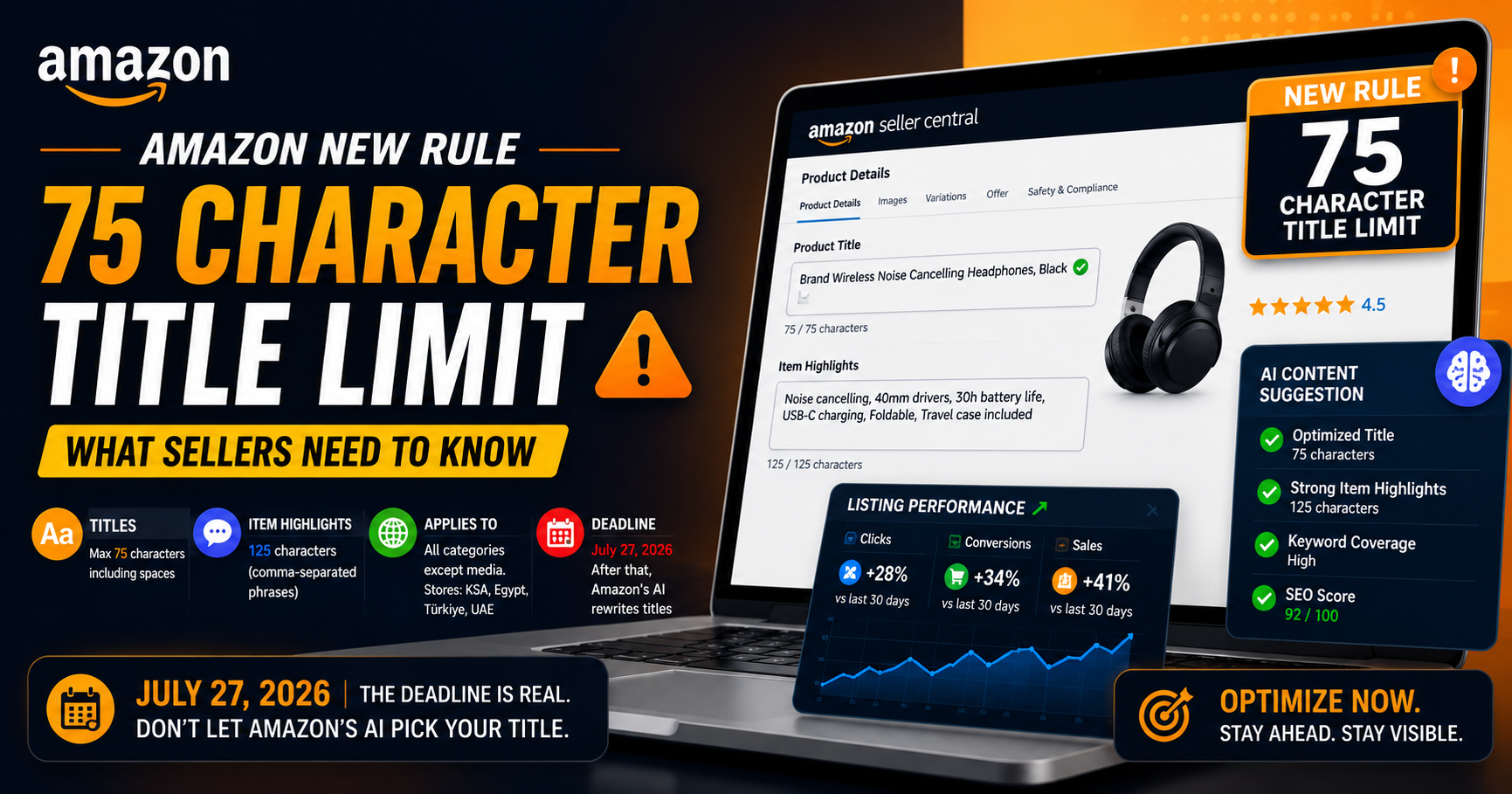
According to recent announcements circulating in the Amazon seller community, Amazon is introducing stricter product title requirements, including a maximum title length of 75 characters for many product categories. The update is designed to improve customer experience, create cleaner search results, and allow structured product data to play a larger role in product discovery.
For sellers, this change isn't just about shortening titles. It represents a major shift toward structured listing optimization, where concise titles and enhanced product attributes become more important than keyword-heavy naming conventions.
In this guide, we'll break down what the new rule means, why it matters, and how sellers can adapt before it impacts visibility and conversions.
Understanding Amazon's New Product Title Requirements
The biggest change is simple:
Product Titles
- Maximum 75 characters
- Includes spaces
- Focus on brand, product type, and primary attribute
Item Highlights
- Approximately 125 characters
- Comma-separated phrases
- Used to communicate features and benefits
Structured Data Becomes Critical
Amazon increasingly relies on:
- Product attributes
- Backend keywords
- Bullet points
- Item highlights
- AI-generated content interpretation
Rather than allowing long keyword-stuffed titles, Amazon wants listings that are easier for shoppers to read and compare.
This reflects a broader trend across ecommerce platforms where customer experience takes priority over aggressive SEO tactics.
Why This Matters for Amazon Sellers
Many sellers currently use titles like:
Old Style Example:
"Brand Wireless Noise Cancelling Bluetooth Headphones Over Ear Foldable Deep Bass Travel Case Included Black"
These lengthy titles often exceed 150–200 characters.
Under the new approach, Amazon may prefer:
New Style Example:
"Brand Wireless Noise Cancelling Headphones, Black"
The rest of the information is expected to appear in structured fields.
Potential Impact Areas
Search Visibility
Sellers relying heavily on title keywords may experience ranking fluctuations if those keywords disappear from titles.
Click-Through Rate
Cleaner titles can improve readability and increase shopper confidence.
Conversion Rate
Customers often prefer concise product names over keyword-heavy listings.
AI-Driven Shopping
Amazon's AI systems increasingly use structured data to understand products rather than relying solely on title text.
Common Mistakes Sellers Will Make
Whenever Amazon changes listing requirements, many sellers react incorrectly.
Here are the biggest mistakes to avoid.
1. Removing Important Keywords Completely
A shorter title does not mean keywords no longer matter.
Instead, distribute keywords across:
- Item highlights
- Bullet points
- Backend search terms
- Product descriptions
- A+ Content
2. Keeping Old Keyword-Stuffed Habits
Titles overloaded with modifiers often hurt readability.
Bad example:
"Premium Best Durable Waterproof Lightweight Portable Stainless Steel Bottle"
Good example:
"Brand Stainless Steel Water Bottle, 32oz"
3. Ignoring Structured Attributes
Amazon increasingly rewards complete catalog data.
Missing attributes can reduce discoverability.
4. Waiting Until the Deadline
Large catalogs may contain hundreds or thousands of listings.
Manual updates become difficult when deadlines approach.
Best Practices for Optimizing Under the 75-Character Rule
Lead With Brand
Customers recognize brands first.
Format:
Brand + Product Type + Key Attribute
Example:
"Brand Running Shoes, Men's Lightweight Trainer"
Prioritize Buyer Intent
Ask:
"What information helps a shopper identify this product instantly?"
Include:
- Product type
- Size
- Color
- Primary benefit
Avoid:
- Repetitive keywords
- Marketing language
- Excessive capitalization
Use Item Highlights Strategically
Item highlights become more valuable than ever.
Include:
- Core features
- Main use cases
- Technical specifications
- Compatibility details
Example:
"USB-C charging, Noise cancelling, 30-hour battery, Foldable"
This format helps Amazon understand products while remaining customer-friendly.
Optimize Backend Search Terms
Backend keywords become increasingly important when title space decreases.
Focus on:
- Alternate spellings
- Synonyms
- Long-tail phrases
- Use-case keywords
Avoid duplicating title keywords unnecessarily.
Actionable Strategies for Amazon Sellers
Conduct a Catalog Audit
Review every ASIN and identify:
- Current title length
- Keyword dependency
- Missing attributes
- Conversion performance
Prioritize best-selling products first.
Create a New Title Framework
A simple framework:
Formula
Brand + Product Type + Key Differentiator
Examples:
- Brand Wireless Earbuds, Black
- Brand Protein Shaker Bottle, 28oz
- Brand Yoga Mat, Extra Thick
This keeps titles compliant and readable.
Map Keywords Across the Listing
Instead of cramming everything into the title:
Title
Primary keyword
Item Highlights
Features and benefits
Bullet Points
Detailed selling points
Description
Customer education
Backend Terms
Secondary keywords
This balanced approach reduces risk.
Monitor Performance Closely
After making changes, track:
- Organic ranking
- Click-through rate
- Conversion rate
- Session percentage
- Buy Box performance
Small title adjustments can significantly affect visibility.
Tools and Solutions for Faster Optimization
Large catalogs require scalable solutions.
Manual optimization becomes difficult when managing dozens or hundreds of products.
Platforms like:
- Listing optimization tools
- Keyword research software
- Catalog management systems
- AI-assisted content generators
can accelerate compliance and testing.
For sellers managing extensive catalogs, tools such as:
can help generate optimized ecommerce content while maintaining consistency across product listings.
The goal is not simply shortening titles—it is improving the overall quality of product data.
FAQ Section
Will Amazon automatically rewrite product titles?
Amazon has indicated increasing use of AI and automated catalog management. Sellers should proactively optimize listings rather than relying on automated changes.
Does a shorter title hurt SEO?
Not necessarily. Amazon increasingly uses structured data, attributes, and backend fields to determine relevance.
What should be included in a 75-character title?
Focus on:
- Brand
- Product type
- Primary attribute
- Essential differentiator
Avoid keyword stuffing.
Are all categories affected?
Requirements may vary by category and marketplace. Sellers should monitor official Seller Central communications for category-specific updates.
How can I preserve keyword coverage?
Use a balanced strategy that includes:
- Item highlights
- Bullet points
- Backend search terms
- Product descriptions
instead of relying solely on title keywords.
Should I update listings now?
Yes. Early preparation reduces risk and provides time to test performance before enforcement deadlines.
Conclusion
Amazon's move toward a 75-character title limit represents more than a formatting update. It signals a shift toward cleaner shopping experiences, structured product data, and AI-assisted catalog management.
Sellers who continue relying on long, keyword-heavy titles may find themselves at a disadvantage. The winning strategy is to create concise titles, strengthen item highlights, optimize backend keywords, and improve overall listing quality.
Those who adapt early will be better positioned to maintain rankings, improve conversions, and stay ahead of future Amazon catalog changes.