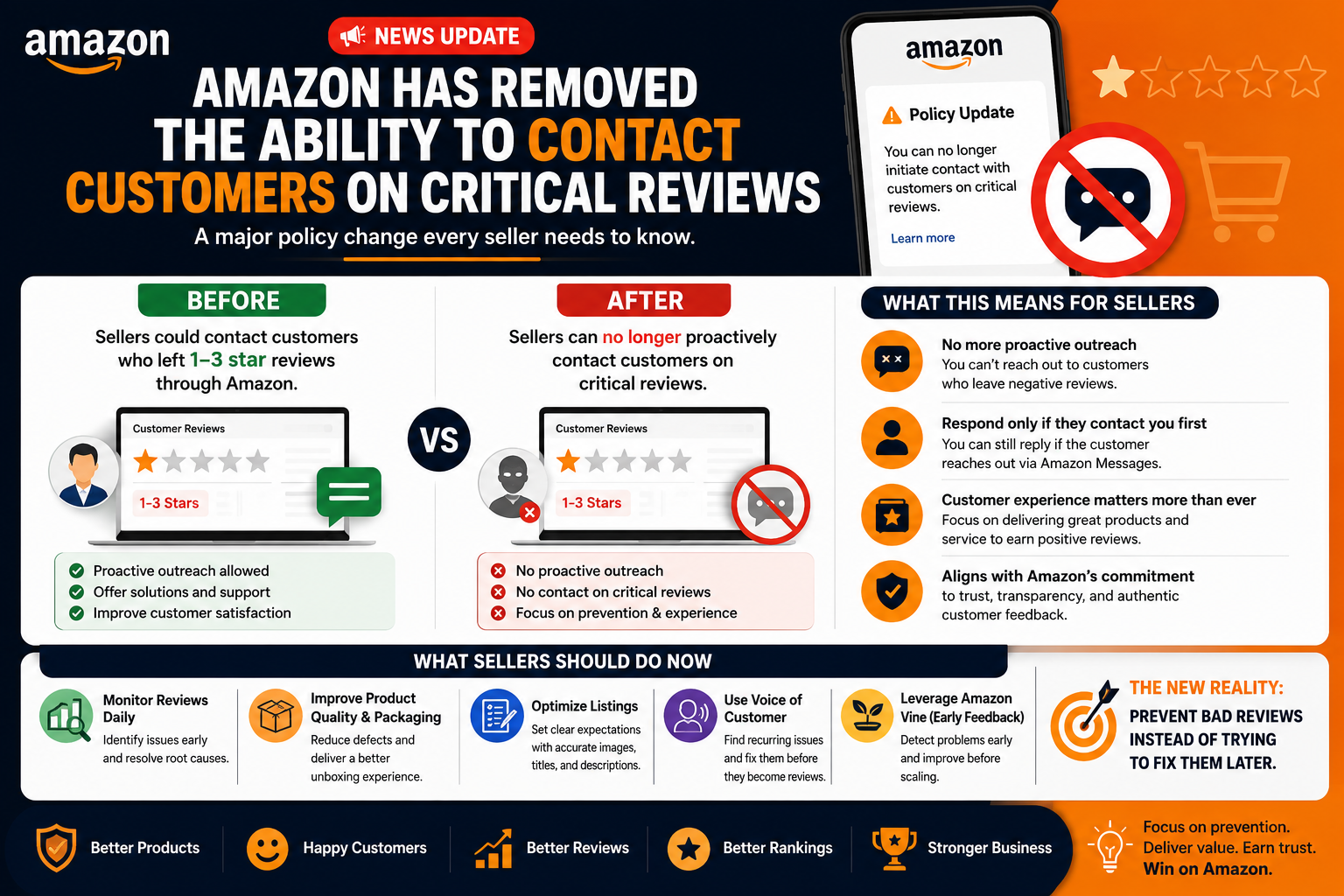
Amazon Has Removed the Ability to Contact Customers on Critical Reviews
Amazon has introduced a significant policy change that every seller should understand.
Previously, sellers could proactively contact customers who left critical reviews (typically 1–3 stars) through Amazon's review management tools. This allowed brands to offer support, resolve issues, and sometimes improve customer satisfaction.
That option is now gone.
The change signals a broader shift in Amazon's focus on transparency, authentic customer feedback, and trust within its marketplace.
For sellers, this means the strategy can no longer be:
"Fix bad reviews after they happen."
Instead, it must become:
"Prevent bad reviews before they happen."
What Changed?
Before
Sellers could:
- Contact customers who left critical reviews
- Offer support or troubleshooting
- Resolve product issues proactively
- Improve customer experiences after purchase
Now
Sellers can no longer:
- Initiate contact with customers based solely on critical reviews
- Proactively reach out to dissatisfied buyers
- Use negative reviews as a trigger for customer outreach
However, sellers can still respond if the customer contacts them first through Amazon's messaging system.
Why This Matters
Negative reviews affect:
- Conversion rates
- Product rankings
- Advertising performance
- Brand reputation
- Buy Box performance
Without direct outreach options, sellers have fewer opportunities to recover unhappy customers after a negative review appears.
This makes prevention more important than ever.
The New Amazon Reality
Amazon is sending a clear message:
Customer Experience Comes First
Instead of relying on damage control, brands must focus on delivering exceptional experiences from the beginning.
Authentic Reviews Matter
Amazon wants reviews to reflect genuine customer experiences without seller influence.
Trust Is Becoming a Ranking Factor
Products that consistently satisfy customers are more likely to receive:
- Better ratings
- Stronger rankings
- Higher conversion rates
Common Reasons Sellers Receive Negative Reviews
Understanding why customers leave poor reviews is the first step toward prevention.
Product Doesn't Match Expectations
Misleading images or unclear descriptions create disappointment.
Quality Issues
Manufacturing defects, durability concerns, or inconsistent quality frequently generate negative feedback.
Packaging Problems
Damaged products often result in low ratings.
Missing Information
Customers become frustrated when listings don't answer key questions.
Shipping Delays
Although Amazon handles many logistics, delivery issues can still impact customer satisfaction.
What Sellers Should Do Now
Optimize Product Listings
Clear expectations reduce dissatisfaction.
Improve:
- Product titles
- Images
- Bullet points
- A+ Content
- Videos
Customers should know exactly what they're buying.
Monitor Reviews Daily
Track recurring complaints.
Look for patterns such as:
- Size confusion
- Quality concerns
- Missing features
These insights reveal opportunities for improvement.
Use Voice of Customer Reports
Amazon's Voice of Customer tool helps identify recurring customer frustrations before they become major issues.
Pay attention to:
- Product defects
- Negative experiences
- Customer complaints
Improve Product Quality
The best review strategy is a better product.
Focus on:
- Quality control
- Packaging improvements
- Product testing
- Customer satisfaction
Leverage Amazon Vine
Before scaling aggressively, consider using Amazon Vine to generate authentic early feedback.
This helps identify issues before they impact large numbers of customers.
Why This Policy Change Can Benefit Good Brands
At first glance, the update may seem restrictive.
However, it creates advantages for sellers who prioritize customer experience.
Brands that:
- Deliver quality products
- Set accurate expectations
- Focus on customer satisfaction
will naturally earn stronger reviews and build long-term trust.
The marketplace becomes more competitive based on product quality rather than post-review recovery tactics.
Tools and Solutions for Sellers
To reduce negative reviews, sellers should focus on listing optimization and customer expectation management.
AiShots helps brands create:
- Better product images
- Conversion-focused listings
- Optimized A+ Content
- Clear product messaging
The goal is simple:
Prevent confusion before purchase and reduce review-related issues.
FAQ Section
Can sellers still contact customers after negative reviews?
No. Sellers can no longer proactively contact customers based solely on critical reviews.
Can sellers reply if a customer messages them first?
Yes. Sellers may still respond through Amazon Messages when customers initiate contact.
Why did Amazon make this change?
The update aligns with Amazon's focus on trust, transparency, and authentic customer feedback.
How can sellers reduce negative reviews now?
Improve listings, enhance product quality, monitor feedback, and address recurring customer concerns before they become widespread.
Conclusion
Amazon's latest review policy update changes how sellers manage customer feedback.
The old strategy was reactive:
Fix negative reviews after they appear.
The new strategy is proactive:
Prevent negative reviews from happening in the first place.
Brands that focus on product quality, customer experience, and accurate listing content will be in the strongest position to thrive under this new policy.